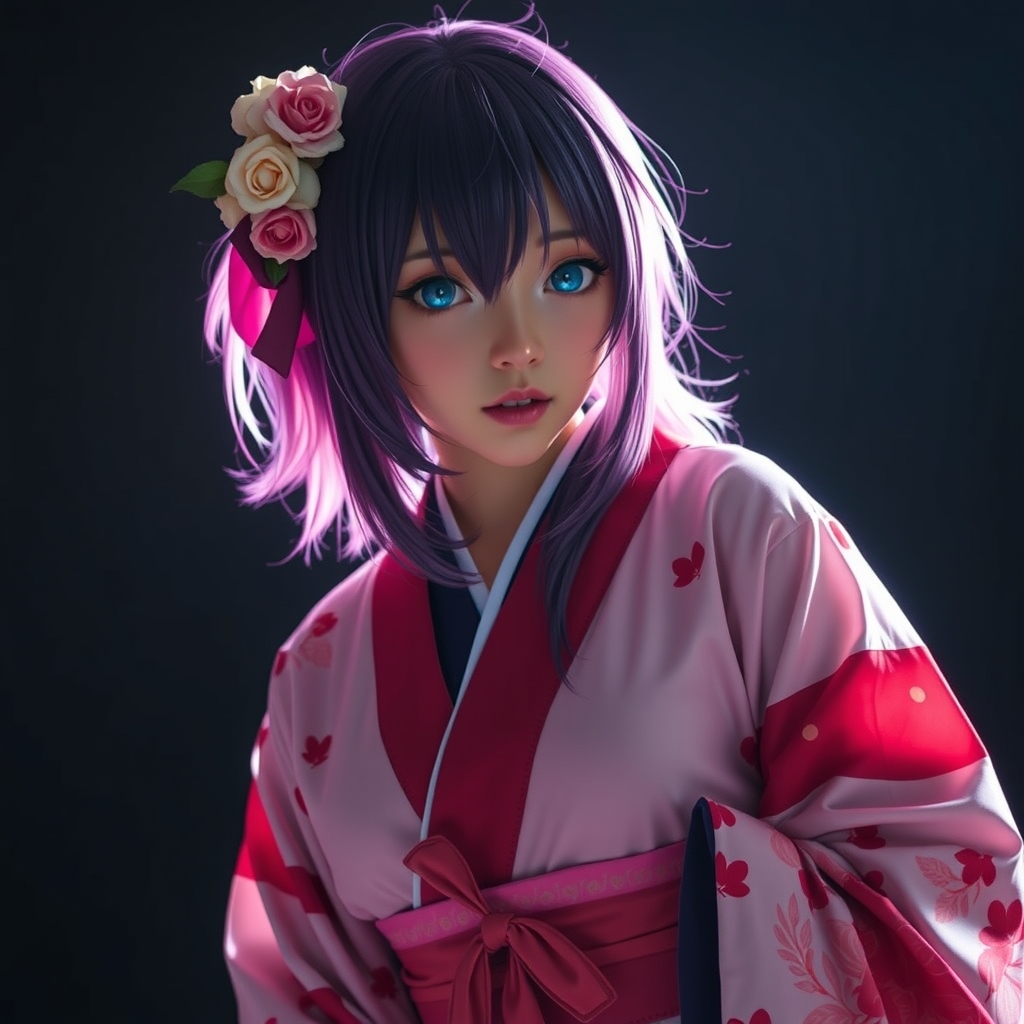
In the world of anime cosplay, traditional Japanese attire—from the formal kimono to the casual yukata—is a recurring staple. However, there is a common pitfall that separates a "costume" from a "garment": the choice of fabric. Many cosplayers default to shiny, low-grade bridal satin or thin polyester blends because they are accessible and affordable. The problem is that these fabrics do not behave like traditional textiles; they cling to the body, create unnatural creases, and often have a synthetic sheen that looks artificial under convention lighting.
To elevate your build, you must shift your focus from "finding a color match" to "finding a textile behavior." Traditional Japanese garments rely on the weight and weave of the fabric to create the iconic columnar silhouette. Whether you are recreating a high-fashion kimono for a villain or a breezy yukata for a slice-of-life protagonist, these five sourcing strategies will help you achieve a professional, realistic result.
1. Prioritize "Drape" Over "Shine"
The most critical element of a kimono is the drape. Traditional kimono fabrics are designed to hang straight down from the shoulders, masking the contours of the body to create a structured, cylindrical shape. When sourcing fabric, avoid "stretch" materials unless the character design specifically requires it. Stretch fabrics pull across the chest and hips, destroying the intended silhouette.
Instead, look for woven fabrics. If you are on a budget, a high-quality cotton poplin or a matte polyester crepe can mimic the look of traditional textiles without the extreme cost of authentic silk. When testing a fabric at the store, hold it up and let it hang; if it collapses into sharp, clingy folds, it will likely be too thin. If it holds a soft, architectural curve, it is a winner. For a more authentic look, seek out "slub" fabrics—those with slight, intentional irregularities in the weave—which add organic texture and prevent the garment from looking like a plastic sheet.
2. Master the Art of the Yukata Cotton
A yukata is a casual, summer kimono, traditionally made from cotton or hemp. Using a heavy satin for a yukata is a common mistake that makes the garment look stifling and incorrect. To achieve a realistic yukata, you should source lightweight cotton lawn or cotton cambric.
These fabrics are breathable and have a matte finish that absorbs light, making them ideal for the bright, floral patterns often seen in anime. If you cannot find a pre-printed fabric that matches your character, consider sourcing a high-thread-count white cotton and using fabric dyes or textile paints. Because cotton is absorbent, it takes dye well, allowing you to create custom gradients (known as bokashi) that are common in traditional Japanese designs. Remember to pre-wash your cotton fabrics to account for shrinkage before you begin cutting your panels, as cotton can shrink significantly during the first wash.
3. Sourcing Alternatives to Expensive Silk
Authentic silk chirimen or rinzu is breathtaking but prohibitively expensive for most cosplayers. To get the luxury look of silk without the price tag, explore Rayon or Viscose blends. Rayon is a semi-synthetic fiber that mimics the weight and fluid movement of silk far better than polyester does. It has a "cool" feel to the touch and a subtle luster that looks sophisticated rather than shiny.
If you are aiming for a more structured, formal kimono (like those worn by nobility or high-ranking officials in anime), look for Tussah silk alternatives or heavy linen blends. Linen provides a crispness that helps the collar hold its shape—a vital component of the kimono's aesthetic. If you find a fabric that is too thin, consider interfacing the collar and the obi (sash) to provide the necessary rigidity, ensuring the garment doesn't collapse under its own weight.
4. Navigating the Obi: Finding the Right Rigidity
The obi is the centerpiece of the ensemble, and it requires a completely different sourcing approach than the kimono itself. A common mistake is using the same fabric for the obi as the robe. In reality, the obi must be significantly stiffer to support the weight of the garment and maintain its shape.
For a realistic obi, source heavyweight brocade, jacquard, or upholstery fabric. These materials have built-in stiffness and intricate patterns that mirror the luxury of traditional woven sashes. If your chosen fabric is still too floppy, do not rely on the fabric alone. Source a heavy-duty fusible interfacing or a layer of buckram to insert inside the obi. This prevents the sash from wrinkling or sagging throughout a long convention day, keeping your silhouette sharp and professional.
5. Strategic Sourcing for Patterns and Prints
Finding a fabric that perfectly matches an anime character's specific kimono pattern can feel impossible. When you can't find an exact match, stop searching for "kimono fabric" and start searching for "bohemian prints," "vintage florals," or "geometric jacquards." Many home decor fabrics feature motifs that are strikingly similar to traditional Japanese patterns like Seigaiha (waves) or Asanoha (hemp leaf).
When sourcing prints, keep these practical tips in mind:
- Scale Matters: Ensure the scale of the print matches the character. A giant floral print on a small person can look overwhelming, while a tiny print on a large garment can look like noise from a distance.
- Directional Prints: Be mindful of "one-way" fabrics. Traditional kimono patterns often have a specific orientation. Ensure you buy enough yardage to cut all your panels in the same direction to avoid upside-down motifs.
- The "Satin Backing" Trap: Be wary of fabrics that are matte on one side and satin on the other. These are often thinner than they appear and can be prone to fraying, which is a nightmare when sewing the long, straight seams of a kimono.
Final Thoughts on Fabric Integration
The secret to a high-end anime cosplay is the marriage of accuracy and materiality. By moving away from the "costume shop" mentality and embracing the "tailor" mentality, you transform your work from a simple outfit into a piece of wearable art. Spend time touching the fabrics, testing the drape, and considering how the material will react to the specific geometry of the kimono. Your dedication to sourcing the right textile will be evident the moment you step into the light, providing a level of realism that elevates your craft and your presence at any event.