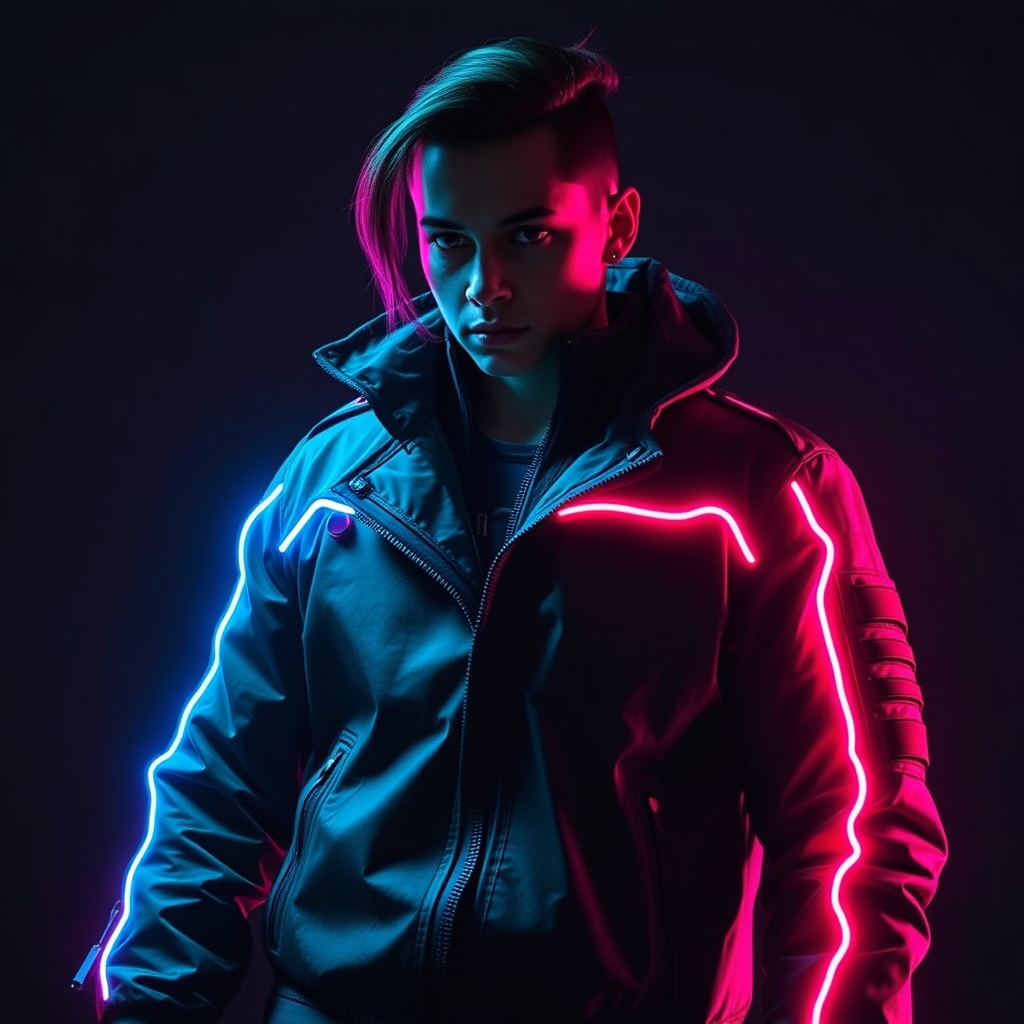
The "Edgerunner" aesthetic is defined by a clash of high-tech utility and street-level grit. When recreating the iconic yellow jacket from Cyberpunk 2077, the biggest challenge isn't the pattern—it's the materiality. To move beyond a "costume" look and into a "screen-accurate" garment, you must move away from standard costume satins and towards industrial-grade textiles that provide the necessary structural rigidity and light-reflective properties.
Selecting the Base Fabric: Beyond the Bolt
The jacket's silhouette relies on a heavy-duty, semi-rigid fabric that holds its shape even when not worn. Standard polyester blends often drape too softly, making the jacket look like a pajama set rather than tactical gear. To achieve the authentic Night City look, consider these three material options:
- Heavyweight Nylon Cordura: This is the gold standard for tactical gear. It is abrasion-resistant and holds a crisp edge, which is essential for the oversized collar. Look for 500D or 1000D weights.
- Industrial PVC or Vinyl: If you are aiming for the high-gloss, synthetic sheen seen in the game's promotional art, a matte-finish PVC is ideal. Be warned: PVC does not breathe, so you must line the garment with a moisture-wicking fabric like athletic mesh.
- Heavy-Duty Twill with a DWR Coating: For a more "lived-in" look, a heavy cotton-poly twill treated with a Durable Water Repellent (DWR) spray provides a slight sheen and the structural integrity needed for the jacket's boxy fit.
Pro Tip: When sourcing "Cyberpunk Yellow," avoid neon-yellows which can look "high-visibility vest" rather than "high-fashion dystopia." Look for "Amber" or "Mustard" tones with a slight orange undertone to ground the color in a realistic palette.
Engineering the High-Collar Architecture
The signature feature of the Edgerunner jacket is the exaggerated, standing collar. Without internal support, the collar will collapse under its own weight, ruining the silhouette. To keep the collar vertical and sharp, you need to employ "interfacing" techniques from the world of millinery and tailoring.
The Layering Strategy
- Heavyweight Fusible Interfacing: Apply a non-woven, heavy-duty fusible interfacing to the wrong side of your main fabric. This adds the first layer of stiffness.
- Plastic Boning or HDPE Sheets: For the extreme edges of the collar, sew a thin strip of High-Density Polyethylene (HDPE) plastic—often found in flexible cutting mats—into the seam. This ensures the collar never wilts.
- Horsehair Braid: If you want the collar to have a slight, intentional curve rather than a rigid 90-degree angle, sew a 1-inch horsehair braid into the top hem.
Integrating Tech-Wear Hardware
The difference between a garment and a piece of "tech-wear" is the hardware. Replacing standard zippers and buttons with industrial components instantly elevates the build. Avoid plastic zippers; they are too flimsy for the heavy fabrics mentioned above.
Sourcing Industrial Zippers: Look for YKK #5 or #8 molded plastic or metal zippers. For the oversized front closure, a double-slider zipper allows you to open the jacket from both the top and bottom, mimicking the functional versatility of tactical gear. Use a "zipper tape" in a contrasting black or charcoal to create a visual border that defines the jacket's geometry.
Webbing and Straps: The jacket features various utility straps. Instead of using ribbon, source 1-inch nylon webbing. To attach these, avoid simple stitching, which can tear under the tension of heavy fabric. Use "box-X" stitching (a square with a cross inside) to ensure the straps are structurally sound and look professionally manufactured.
Weathering for the "Street Kid" Aesthetic
A pristine yellow jacket looks like it just came off a showroom floor in Arasaka Tower. To make it look like it belongs in the slums of Santo Domingo, you need to apply strategic weathering. The goal is to simulate "urban grime" without making the garment look dirty.
The Weathering Process
- Edge Abrasion: Use a fine-grit sandpaper or a Dremel tool on a low setting to lightly scuff the edges of the cuffs, the collar, and the hem. This simulates the natural wear and tear of a garment used in a harsh environment.
- Acrylic Washing: Mix a small amount of black and burnt sienna acrylic paint with water and a drop of dish soap (to break surface tension). Using a sponge, dab this mixture into the seams and crevices of the jacket. This creates "built-up" grime that settles where dust would naturally collect.
- Dry Brushing: Use a stiff brush with a tiny amount of silver metallic paint to hit the corners of the zippers and plastic buckles. This simulates "paint chipping" or metal wear, suggesting the jacket has seen years of hard use.
Managing the Weight and Comfort
Using industrial materials like Cordura and PVC creates a heavy, heat-trapping garment. To ensure you can actually wear this at a convention for eight hours, you must prioritize the interior construction.
Lining the Interior: Do not leave the industrial fabric raw against your skin. Line the jacket with a breathable, moisture-wicking polyester or a lightweight rayon. This not only makes the jacket more comfortable but also protects the outer fabric from body oils and sweat, which can degrade PVC over time.
Ventilation Hacks: Because the high collar and heavy fabric restrict airflow, consider installing hidden "pit zips" or mesh panels under the armpits. These can be hidden behind the jacket's folds, allowing you to regulate your temperature without compromising the exterior aesthetic. If you are adding LED elements to the collar, ensure your battery packs are mounted in a dedicated internal pocket with a reinforced bottom to prevent the weight of the batteries from sagging the garment.
Final Assembly and Fitting
The Edgerunner jacket is designed to be oversized, but "oversized" is not the same as "too big." The shoulders should still align with your natural frame to avoid looking like you are wearing a tent. When fitting the jacket, pay close attention to the sleeve length; the sleeves should end exactly at the base of the thumb to maintain the structured, architectural look of the design. If the fabric is too stiff to allow for natural arm movement, consider adding "action pleats" or gussets in the shoulder blades to provide a range of motion without distorting the jacket's shape.