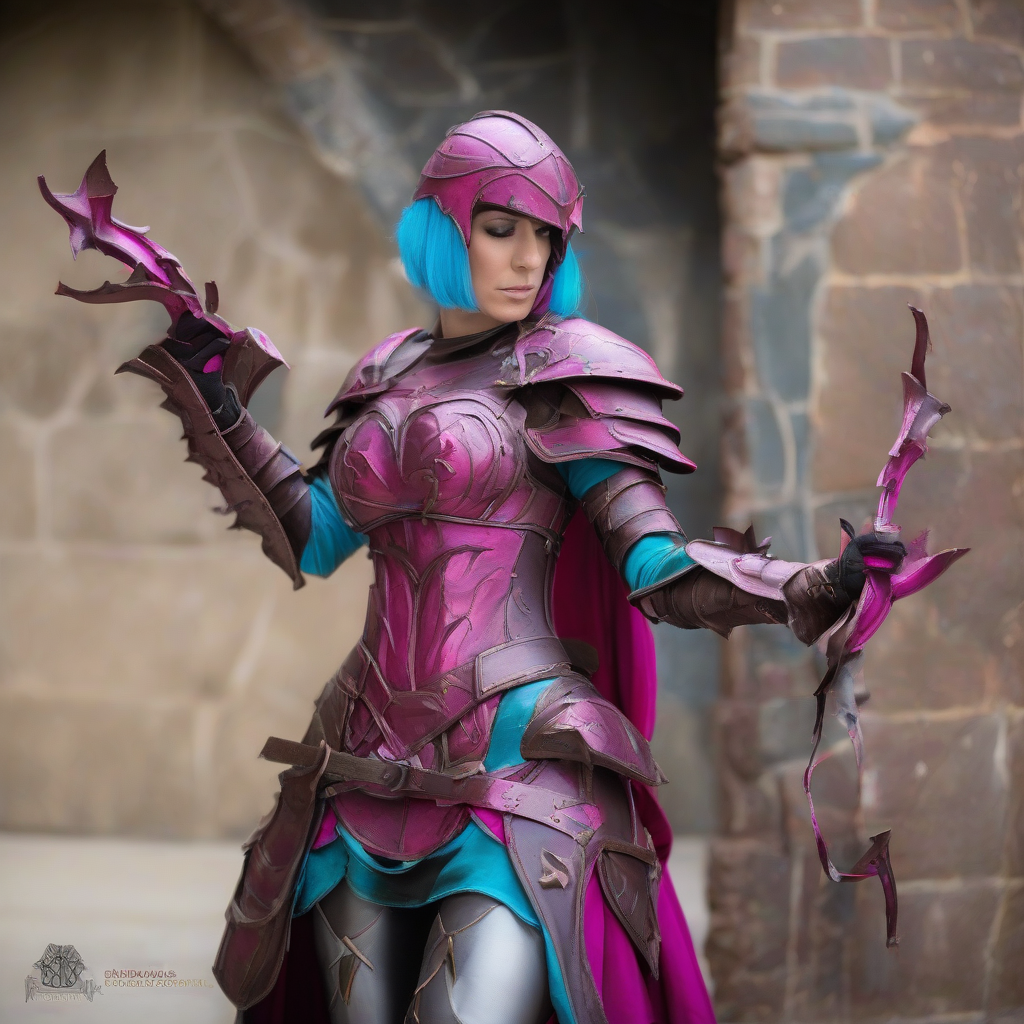

The recent special preview screening of Eons: Life and Death on Pangea has left the community buzzing not just about the narrative, but about the sheer biological ambition of its creature designs. For cosplayers, the challenge of translating these prehistoric entities into wearable art is daunting. We aren't just dealing with "dinosaurs"; we are dealing with a specific vision of Pangean ecology that emphasizes massive scale, iridescent textures, and otherworldly anatomy.
To capture the essence of the Eons universe, builders must move beyond basic foam patterns and embrace a hybrid approach to fabrication. Whether you are aiming for a towering apex predator or a delicate, ancient avian, the key lies in balancing structural integrity with organic movement.
Mastering Macro-Scale Anatomy
The most striking element of the Eons preview is the scale. When cosplaying creatures that are meant to be gargantuan, the goal isn't necessarily to be 20 feet tall, but to create the illusion of mass. This is achieved through forced perspective and strategic volume placement.
The Internal Skeleton
For large-scale limbs or tails, standard EVA foam will sag under its own weight. To maintain the rigid, powerful silhouette seen in the Pangean predators, integrate a PVC or aluminum pipe armature. Use a "floating" mount system where the heavy components are supported by a hidden harness worn on the hips and shoulders, rather than relying on the costume's fabric to hold the weight.
Volume Distribution
To simulate the heavy musculature of Pangean life, avoid flat surfaces. Use "muscle sculpting" techniques by layering varying thicknesses of foam. Start with a dense 10mm base and overlay it with 5mm "muscle bands" that follow the anatomical flow of the creature. This creates the deep shadows and highlights necessary to make a costume look biological rather than synthetic.
Texturing the Primeval Skin
The creatures in Eons exhibit a level of detail that transcends simple scales. We see a mix of leathery hides, avian filaments, and bioluminescent patches. Achieving this requires a multi-layered texturing process.
- The Sculpted Base: Instead of painting scales on, use a heat gun to distort EVA foam or use a textured embossing tool to create irregular, organic patterns. For a more professional finish, apply a thin layer of liquid latex or Plasti Dip over the foam to seal the pores.
- Organic Layering: To mimic the "Life and Death" cycle depicted in the film, incorporate mixed media. Use shredded upholstery foam dipped in latex to create decaying skin or fungal growths. For the more vibrant creatures, integrate iridescent window film or holographic powders into your acrylic paints.
- The Wet-Look Finish: Many Pangean creatures appear semi-aquatic or mucosal. Use a high-gloss clear coat or a thin layer of clear silicone sealant on specific areas—like the nostrils, eyes, and joints—to give that "fresh from the swamp" realism.
Engineering Dynamic Movement
A static costume is a statue; a cosplay is a performance. The preview screening highlighted the fluid, rhythmic movement of the Eons creatures. To replicate this, you need to integrate basic mechanical movement into your build.
The Articulated Tail
A heavy tail is a liability unless it is balanced. Build your tail using a "vertebrae" system—individual foam segments sliding over a flexible plastic core (such as a heavy-duty cable tie or a flexible conduit). This allows the tail to sway naturally as you walk, mimicking the predatory grace seen on screen.
Animated Elements
For those comfortable with basic electronics, integrating a servo motor to control a crest or an eyelid can elevate a build from "costume" to "animatronic." A simple Arduino setup can trigger a slow, blinking eye or a flared neck frill, adding a layer of psychological realism that captures the eerie intelligence of the Pangean wildlife.
Integrating Environmental Storytelling
Cosplay is most effective when it tells a story. In the world of Eons, the environment is a character itself. Your costume should reflect the "Life and Death" theme of the Pangean landscape.
Consider adding environmental weathering. This means more than just adding "dirt." Think about the specific ecology: are there parasitic vines clinging to the creature's back? Is there evidence of a territorial fight in the form of scarred scales? Use a technique called "dry brushing" with ochre and sienna tones to simulate prehistoric dust and mud accumulated in the crevices of the skin.
Practical Tips for Convention Survival
Bringing a massive, prehistoric creature to a convention like SDCC requires more than just build skills; it requires a logistics plan. Large-scale creature suits are notorious for overheating and limiting visibility.
- Ventilation: Integrate small 5V blower fans into the head and shoulder areas. Use a mesh fabric for the interior lining to allow heat to escape.
- Sightlines: Do not rely on the creature's eyes for vision. Incorporate a "hidden" viewport, such as a piece of black scrim fabric in the neck or a small camera feed (FPV) tucked into the nostrils of the mask.
- The Handler System: If your tail or wings extend more than three feet beyond your body, you must have a handler. This person is not just an assistant; they are your "spotter" who ensures you don't knock over other cosplayers or get stuck in a doorway.
The world of Eons: Life and Death on Pangea offers a breathtaking canvas for creators. By focusing on anatomical volume, complex texturing, and mechanical movement, you can move beyond the "dinosaur" trope and create a truly prehistoric masterpiece that honors the scale and ambition of the Pangean era.