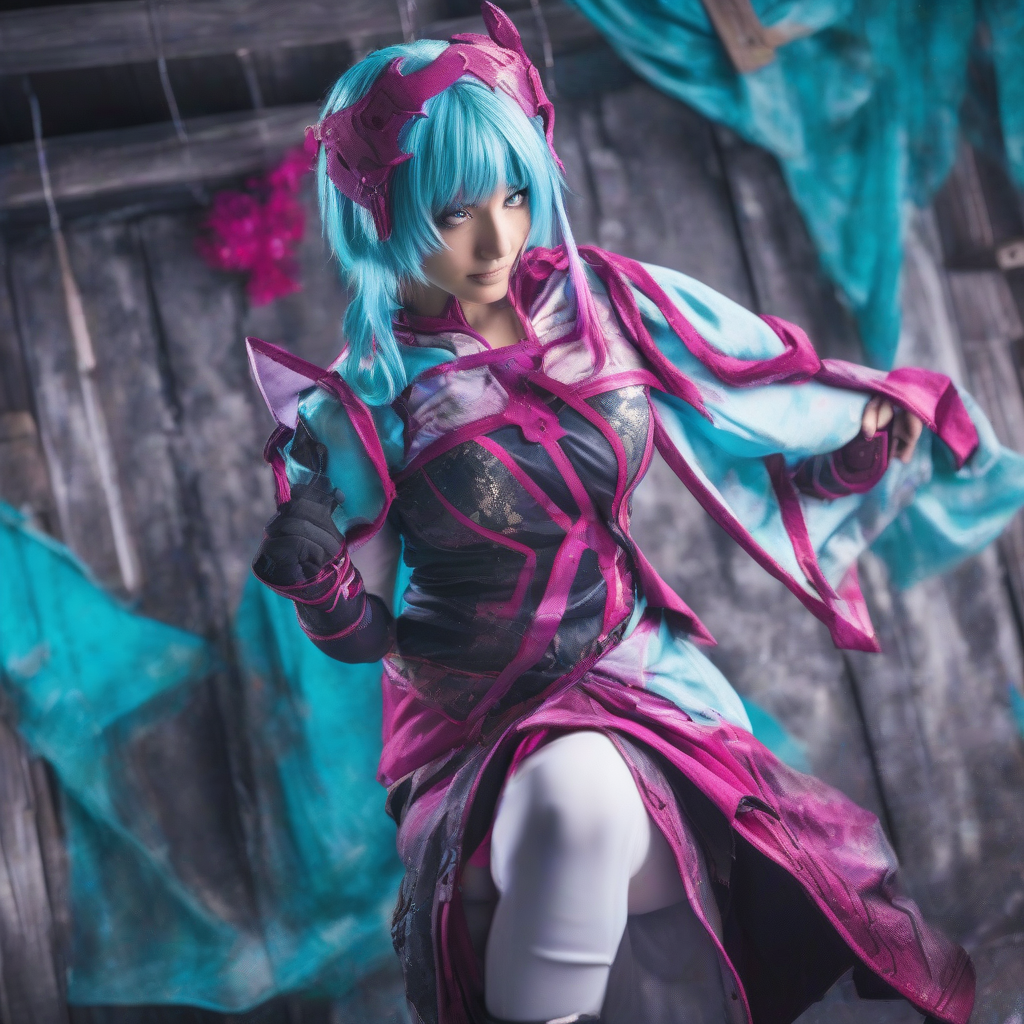

Introduction to Video Game-Inspired Cosplay
Video game-inspired cosplay has become increasingly popular over the years, with many cosplayers pushing the boundaries of creativity and craftsmanship. One of the key elements that sets video game cosplay apart from other types of cosplay is the use of intricate props and detailed costumes. In this article, we'll explore how 3D printing and resin casting can be used to create stunning video game-inspired cosplay props and costumes.
The Benefits of 3D Printing in Cosplay
3D printing has revolutionized the way cosplayers create props and costume pieces. With 3D printing, cosplayers can create complex shapes and designs that would be difficult or impossible to achieve with traditional crafting methods. Additionally, 3D printing allows for rapid prototyping and iteration, making it easier to test and refine designs.
One of the main benefits of 3D printing is its ability to produce highly detailed and accurate models. This is particularly useful for video game-inspired cosplay, where props and costumes often feature intricate details and complex geometries. By using 3D printing, cosplayers can create props and costume pieces that are highly accurate and visually stunning.
Choosing the Right 3D Printing Technology
There are several 3D printing technologies available, each with its own strengths and weaknesses. For cosplay, Fused Deposition Modeling (FDM) and Stereolithography (SLA) are two of the most popular technologies.
- FDM: FDM is a popular choice for cosplay due to its affordability and ease of use. FDM printers work by extruding melted plastic through a heated nozzle, creating layers that build up to form the final model. While FDM can produce highly detailed models, it can be prone to layer shifting and stringing.
- SLA: SLA is a resin-based printing technology that produces highly detailed and accurate models. SLA printers work by curing liquid resin with a laser or UV light, creating layers that build up to form the final model. SLA is a popular choice for cosplay due to its high level of detail and smooth finish.
- Always work in a well-ventilated area: Resin can release strong fumes and particles, so it's essential to work in a well-ventilated area to avoid inhaling these fumes.
- Use protective gear: Wear gloves, safety glasses, and a mask when working with resin to protect yourself from skin and eye irritation.
- Mix resin carefully: Make sure to mix resin and hardener carefully, following the manufacturer's instructions to avoid creating air bubbles or uneven mixes.
- Cosplay.com: A comprehensive resource for cosplayers, featuring tutorials, guides, and community forums.
- 3D Printing Industry: A leading online publication for 3D printing news, reviews, and tutorials.
Resin Casting for Cosplay Props and Costumes
Resin casting is a popular technique for creating cosplay props and costumes. Resin casting involves mixing a liquid resin with a hardener, which is then poured into a mold to create the final model. Resin casting can produce highly detailed and accurate models, and is often used in conjunction with 3D printing.
One of the main benefits of resin casting is its ability to produce models with a high level of detail and texture. Resin casting can also be used to create complex shapes and geometries, making it a popular choice for video game-inspired cosplay.
Tips and Tricks for Working with Resin
Working with resin can be challenging, but with the right techniques and precautions, it can be a safe and rewarding experience. Here are a few tips and tricks for working with resin:
Case Study: Creating a Video Game-Inspired Cosplay Prop
To illustrate the techniques and best practices discussed in this article, let's take a look at a case study of creating a video game-inspired cosplay prop. For this example, we'll be creating a prop replica of the Master Sword from the popular video game series The Legend of Zelda.
To create the Master Sword, we started by designing the prop using 3D modeling software. We then printed the prop using an SLA printer, which produced a highly detailed and accurate model. The prop was then cast in resin, which added a high level of detail and texture to the final model.
Conclusion
Video game-inspired cosplay is a rapidly growing field, with many cosplayers pushing the boundaries of creativity and craftsmanship. By using 3D printing and resin casting, cosplayers can create stunning props and costumes that are highly accurate and visually stunning. With the right techniques and precautions, cosplayers can master the art of video game-inspired cosplay and create props and costumes that are truly out of this world.
For more information on 3D printing and resin casting for cosplay, check out the following resources: