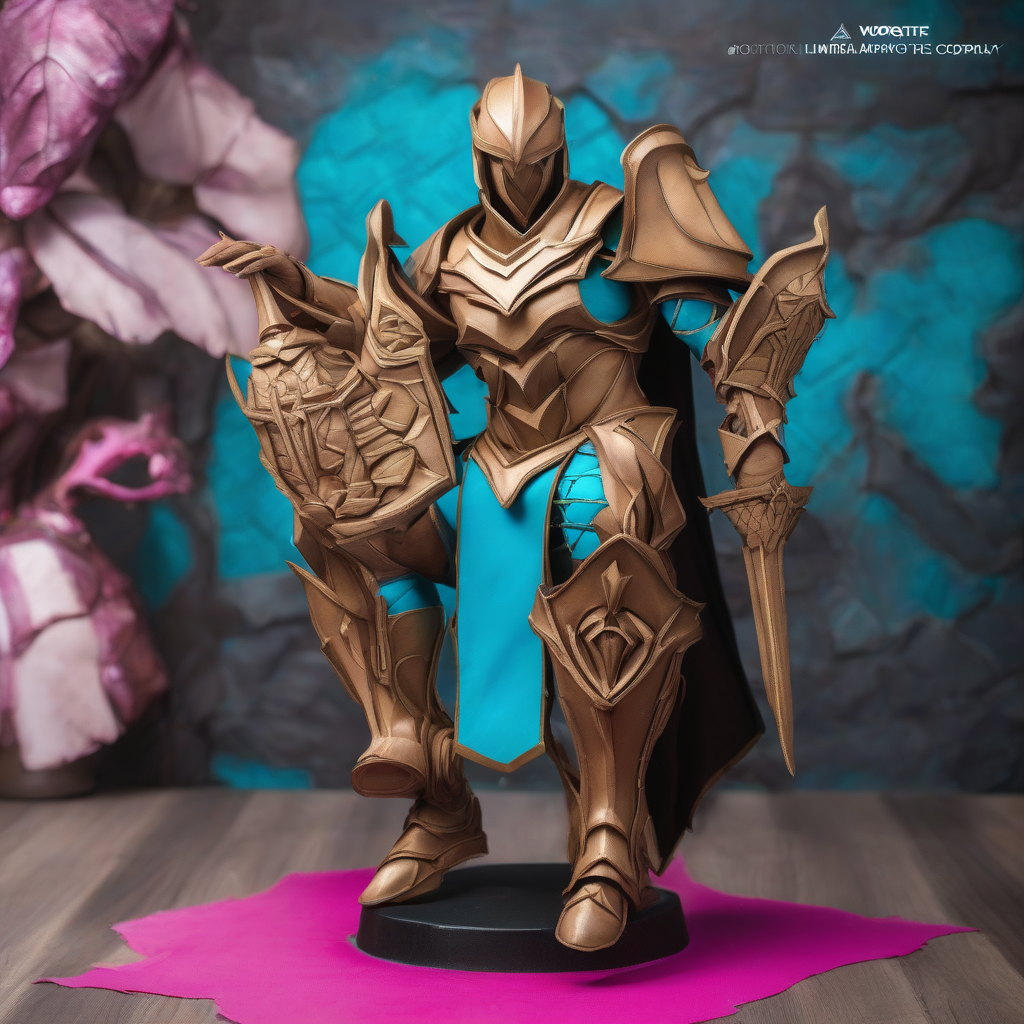

For years, the cosplay community has rallied around the "holy trinity" of materials: EVA foam, Worbla, and 3D printing. While these are indispensable, relying solely on them can sometimes lead to a "foam-look" that lacks the organic complexity or industrial grit found in high-end anime production art. To achieve hyper-realism—the kind where a prop looks like it was forged in a furnace or carved from ancient stone—builders must look beyond the craft store and into the aisles of hardware stores, recycling centers, and kitchen pantries.
The secret to professional prop making is not always the most expensive material, but the ability to manipulate surface tension and texture. By integrating unconventional materials, you can reduce weight, increase durability, and create visual depths that foam alone cannot replicate.
The Industrial Edge: PVC and HDPE Piping
When building oversized weapons, such as the massive scythes or heavy cannons common in shonen anime, foam often suffers from "sag" over time. To solve this, look toward HDPE (High-Density Polyethylene) and PVC piping. While PVC is a staple for internal armatures, using it as a primary surface material can create a sleek, machined look that is nearly impossible to sand into foam.
To transform these industrial tubes into anime props, use a heat gun to create organic curves and bends. The real magic happens with chemical smoothing. For certain plastics, a light application of acetone or specialized plastic solvents can melt the surface just enough to remove the "plastic" sheen, allowing primer to grip more effectively. This creates a seamless, metallic finish that mimics forged steel or futuristic alloys.
Organic Textures: The Power of Plaster and Burlap
Anime often features "ancient" technology or weathered stone ruins. Using foam to simulate stone often looks too porous or "spongy." To achieve a hyper-realistic mineral texture, experiment with Plaster of Paris or joint compound applied over a rigid base.
- The Burlap Technique: To create weathered leather or ancient bandages, avoid expensive faux-leathers. Instead, glue strips of burlap or coarse jute onto your prop. Once the fabric is secure, coat it in a mixture of PVA glue and acrylic paint. This creates a rigid, textured shell that looks like centuries-old fabric.
- Textured Casting: For stone-like effects, apply a thin layer of joint compound over a foam base. While the compound is still wet, stipple it with a crumpled piece of aluminum foil or a stiff-bristle brush. Once dry, the resulting surface is matte and gritty, reacting to weathering paints far more realistically than smooth foam.
The Kitchen Laboratory: Using Food-Grade Materials
Some of the most effective textures in prop making come from the most unlikely places. If you are struggling to create organic, alien, or biological textures for a creature-based anime cosplay, look to the pantry.
Cornstarch and Glue (The Homemade "Worbla"): A mixture of cornstarch and white glue, when cooked down, creates a moldable plastic-like substance. While not as durable as commercial thermoplastics, it is an incredible filler for filling gaps in armor or creating custom organic growths on a prop. Once it cures, it can be sanded to a perfectly smooth finish.
Eggshells and Salt: For hyper-detailed "cracked" effects on armor or skin, apply a thin layer of glue and press crushed eggshells into the surface. After the glue dries, paint over the entire area. The irregular, sharp edges of the shells create a natural fracturing pattern that looks like weathered ceramic or desiccated skin, providing a level of detail that is tedious to carve by hand.
Mastering the Transition: Adhesion and Priming
The biggest challenge when mixing unconventional materials is adhesion. You cannot simply glue PVC to foam with a glue stick and expect it to hold during a convention walk. To ensure your hybrid props don't fall apart, you must focus on mechanical bonds and chemical bridges.
- Mechanical Bonding: Whenever possible, drill holes through your plastic piping and run bolts or heavy-gauge wire through to anchor your foam elements. Do not rely on glue alone for structural joints.
- The "Tooth" Method: Non-porous materials like PVC and HDPE repel paint. To fix this, scuff the surface with 80-grit sandpaper to create "tooth." Follow this with a dedicated plastic primer or a mixture of glue and acrylic paint to create a tacky base that allows your final colors to bond.
- Sealing the Gaps: When transitioning between a rigid plastic core and a soft foam exterior, use a flexible gap filler like silicone sealant or a mixture of acrylic caulk and paint. This prevents the "seam line" from appearing when the prop flexes.
The Final Layer: Weathering Unconventional Surfaces
The difference between a "costume" and a "prop" is the paint job. Unconventional materials react differently to pigments. While foam absorbs paint, plastics repel it, and plaster sucks it in. To achieve a cohesive look, use a layered weathering approach.
Start with a "base coat" that matches the darkest shadow of the object. Then, use dry-brushing with a metallic acrylic to hit the high points of your textures—the ridges of the burlap or the cracks in the plaster. Finally, apply a "wash" of diluted black or brown ink. The ink will settle into the deep crevices of your unconventional materials, emphasizing the physical depth you've created and giving the prop a sense of weight and history.
Summary of Material Substitutions
To help you plan your next build, consider these high-impact substitutions:
- Instead of expensive resin: Try clear epoxy putty mixed with acrylic inks for translucent "crystal" effects.
- Instead of heavy wood: Use PVC pipes reinforced with expanding spray foam for lightweight, rigid structures.
- Instead of faux-leather: Use treated burlap or heavy-duty canvas coated in flexible acrylics.
- Instead of 3D printed textures: Use crushed eggshells or coarse salt mixed into glue for organic pitting.
By stepping outside the confines of traditional cosplay materials, you unlock a new level of artistry. The goal is no longer just to replicate a shape, but to replicate a material. When you stop thinking in terms of "foam" and start thinking in terms of "texture, weight, and light," your props move from the realm of costume and into the realm of cinematic realism.